On each and every machined part the jagged edges are rounded off
Machining is a very important step in the production of parts, and it doesn't matter if you're working with metal or plastic
Posted 4 лет назад in Автомобили и транспорт.

Machining is a very important step in the production of parts, and it doesn't matter if you're working with metal or plastic. As opposed to being cast or molded, part surfaces are cut; therefore, the standard (as-machined) surface finish often needs to be modified for either aesthetic or functional reasons. This is due to the fact that the surface finishes produced by machined processes are, in many instances, more than sufficient for end-use applications. Because of this, the online milling service may need to be performed with a higher level of accuracy, or it may necessitate the use of secondary processes.
Taking a Surface's Roughness into Consideration
The most common method for determining surface roughness is the average surface roughness, which is abbreviated as Ra. This is the measure of surface roughness that is used. The distance from the average surface plane is measured in microinches, and the microinches serve as the unit of measurement. As an example, the Ra rating of the rough surface of a frying pan made of cast iron is approximately 2,000. These numbers are provided for clarity. Although a flaw that was less than one-fiftieth the size of a human hair was discovered and did require repair, the ultra-smooth surface of the mirror that is used by the Hubble Space Telescope is as close to zero as it is possible to get. The flaw was discovered by accident. The majority of the time, the dimensions of machined parts fall somewhere in the middle of the range represented by these two numbers.
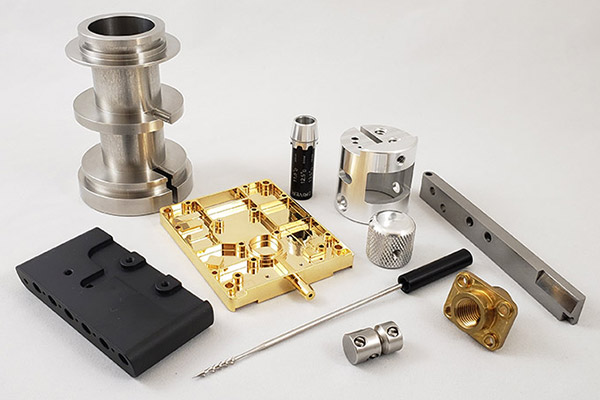
Surfaces that have been machined can sometimes have an acceptable level of roughness in certain circumstances. A surface that is typically preferred for aesthetic reasons has a texture that is more uneven than it would be after it has been machined. A matte finish can eliminate reflections and makes it less likely that fingerprints and other smudges will be visible on the surface. However, Online machining services by itself is insufficient to produce matte finishes on their own without additional processes. In order to achieve this objective, secondary processes will need to be utilized. Some examples of these processes include bead blasting and ceramic substrate tumbling.
Enhanced Movement That Requires Less Effort Across
What kind of feedback can you anticipate receiving for your contributions? In the process known as deburring, the sharp edges of every machined part are smoothed out and rounded off. Every plastic component that was machined is kept in its machined state, which may result in visible tool marks being left behind in the component. On the other hand, particular metal parts provide additional opportunities for customization. It is essential to bear in mind that precision-machined parts frequently have sharp edges, and because of this fact, they should be handled with caution.
Bead blasting is a popular choice for the surface finishing process for machined parts. This is due to the fact that it produces a finish that is uniform and matte.
If you want an in-depth look at all of our design specifications, you can get all of the information you need from these guidelines for CNC milling. These guidelines provide all of the information that you will require.
Despite this, the higher roughness of Ra 60 is not something that the vast majority of people would describe as being rough. There will be visible tooling swirls on a surface that has an Ra value of sixty; however, the surface will not feel rough to the touch. A microscope is required in order to observe the subtle differences that can be found on the surface. This level of roughness can sometimes, depending on the application, lead to incremental wear in a moving part, and it can cause weakness in areas of a part that are stressed. Other times, it can cause a part to fail entirely. It's possible for both of these problems to arise at the same time. It is even possible that it will allow corrosion to form on your parts if it is allowed to continue. These secondary processes are the ones that are in charge of this step.
The Steps After the Processing Have Been Completed
To achieve higher levels of finished machined parts, we have a number of different options available to us, and the secondary finishing processes are of the utmost importance. In order to achieve a smooth finish on the surfaces of machined parts, graining and lapping are typically utilized. Although they are comparable, the two make use of separate pieces of equipment. In either case, the component in question will undergo a process in which it will be passed back and forth across a series of abrasives that feature progressively finer grain sizes. This will continue until the desired level of surface smoothness is achieved. Depending on the number of steps that are applied to the graining process, the final surface finish that can be achieved can range anywhere from Ra 4 to Ra 32. The values of surface roughness that can be produced by lapping range from 2 to 16. Since lapping is the process that is used to produce precision astronomical telescope mirrors, the fact that this is the case shouldn't come as much of a surprise to anyone. There is some overlap in the relative smoothness that can be achieved by graining or lapping, but the decision to use one process rather than the other can be based on a variety of factors, including price. Graining can be used to achieve a smoother surface than lapping can.
Показать полностью...