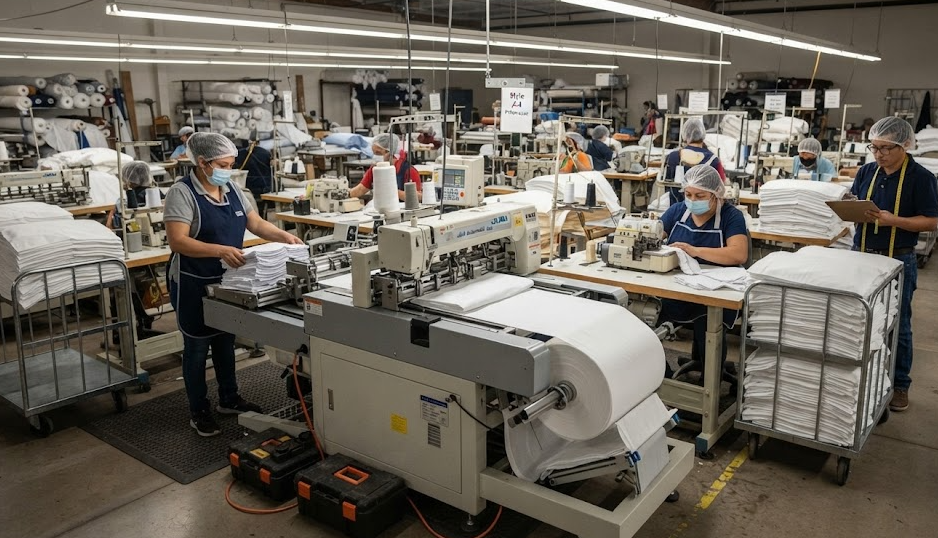
How to Manage High-Volume Pillowcase Production for B2B Orders
Producing pillowcases in large quantities is not as simple as cutting fabric and sewing it into shape.
Posted 6 des heures depuis in Autre.

Producing pillowcases in large quantities is not as simple as cutting fabric and sewing it into shape. For hotels, retailers, home textile brands, wholesalers, and private-label customers, a large order usually comes with strict requirements for fabric, size, color, stitching, packaging, and delivery.
When thousands or even millions of pillowcases are involved, small differences between batches can quickly become a major problem. Working with an experienced pillowcase manufacturer can help buyers maintain consistent quality while keeping production efficient.
Hezong Xinxifuwu, for example, can support large-volume orders through organized material sourcing, centralized cutting, sewing production, quality inspection, and customized manufacturing.
Why Consistency Is Important for Bulk Orders
For a small order, a minor difference in fabric weight or size may not seem serious. In high-volume pillowcase production, however, the same difference can appear across thousands of pieces.
Typical production problems may include:
- Different fabric GSM between batches
- Incorrect finished dimensions
- Uneven colors
- Loose or damaged seams
- Excessive shrinkage
- Incorrect labels or packaging
- Missing or incorrect quantities
These problems can result in customer complaints, product returns, and additional costs.
A dependable bulk pillowcase manufacturer should therefore have quality controls throughout production instead of checking everything only after the sewing process has finished.
A typical manufacturing workflow includes:
Material sourcing → Fabric inspection → Cutting → Sewing → Finishing → Quality inspection → Packaging → Shipment
Keeping this process organized helps manufacturers produce repeat orders that remain close to the approved sample.
Choosing the Right Fabric for Pillowcase Production
Fabric is one of the first things buyers need to confirm. Different materials have different characteristics during cutting, sewing, washing, and finishing.
Common options include cotton, polyester, blended fabrics, and other textile materials. The right choice depends on the intended market and product requirements.
For bulk orders, buyers should clearly confirm details such as:
- Fiber composition
- Fabric weight or GSM
- Yarn specification
- Weave structure
- Fabric width
- Shrinkage rate
- Colorfastness
Before production begins, the incoming fabric should be checked carefully. Problems such as weaving defects, incorrect GSM, inconsistent color, or unsuitable fabric width are much easier to solve before cutting than after thousands of pillowcases have already been sewn.
Accurate Cutting Helps Reduce Waste
Cutting becomes increasingly important as production volume grows.
If the dimensions of each cut piece are slightly different, the finished pillowcases may not have consistent sizes. Poor cutting layouts can also increase fabric waste and raise the final product cost.
A professional production line should pay attention to:
- Finished pillowcase dimensions
- Seam allowance
- Envelope or flap size
- Cutting alignment
- Fabric utilization
Efficient cutting layouts can make better use of each roll of fabric while keeping the finished products consistent. Centralized cutting also makes it easier to supply standardized fabric pieces to multiple sewing lines.
Sewing Quality Affects Product Life
Pillowcases are frequently washed, dried, folded, and handled. As a result, sewing quality has a direct influence on how long the product can be used.
A professional manufacturer should control thread tension, stitch density, seam allowance, edge finishing, and reinforcement in areas that receive greater stress.
The exact sewing construction can also depend on the end use. For example, pillowcases supplied to hotels and other hospitality businesses may need stronger seams because commercial laundry processes are generally more demanding than normal household washing.
Control Shrinkage Before Mass Production
Shrinkage is another issue that should be considered before placing a large production order.
Natural fibers, particularly cotton, may change in size after washing or finishing. If this is not considered during production, the finished pillowcase may not meet the required dimensions after use.
Manufacturers can carry out washing or finishing tests before mass production to understand how the fabric behaves. The results can then be used to establish appropriate cutting dimensions and production specifications.
This simple step can help reduce size-related complaints after delivery.
Keep Colors Consistent Between Batches
Color is especially important for home textile products because buyers usually expect all items in the same order to look consistent.
For large orders, manufacturers should pay attention to dye lots and use approved physical color references where appropriate. This helps reduce visible differences between production batches.
Color control becomes even more important when pillowcases are sold together with sheets, duvet covers, blankets, or other products as part of a complete bedding collection.
Quality Checks Should Happen During Production
Final inspection is important, but it should not be the only quality-control step.
For bulk pillowcase manufacturing, checking different stages of production can identify problems earlier and reduce the number of defective products reaching the final inspection stage.
A practical inspection process may include:
Incoming material inspection: Check fabric composition, GSM, width, color, and visible defects.
Production inspection: Check dimensions, stitching, seam quality, edge finishing, and component matching while production is underway.
Final inspection: Examine finished size, appearance, loose threads, stains, holes, color consistency, labels, and packaging.
For larger B2B projects, the manufacturer can also follow the buyer's agreed inspection requirements and sampling procedures.
How Can a Manufacturer Handle Large Orders?
Large-scale production requires more than having a large number of sewing machines.
Cutting, sewing, finishing, inspection, and packaging all need to work at a suitable production pace. If one stage has much lower capacity than the others, it can become a bottleneck and affect the delivery schedule.
An experienced pillowcase manufacturer such as Hezong Xinxifuwu can coordinate different stages of production to support large and repeat orders while keeping product specifications consistent.
This is particularly valuable for wholesalers, retailers, hotels, and brands that need to reorder the same product regularly.
Custom Pillowcases for OEM and Private Labels
Many B2B buyers do not want standard pillowcases. They may need products made according to their own specifications or brand requirements.
Depending on the project, customization can include:
- Fabric type and composition
- Pillowcase dimensions
- Custom colors
- Closure design
- Embroidery or printing
- Woven brand labels
- Care labels
- Individual packaging
- Carton packing quantities
For private-label projects, packaging artwork, labels, product specifications, and carton requirements should be confirmed before mass production.
It is also useful to approve a pre-production sample before the full order starts. A clear specification sheet combined with an approved sample gives both the buyer and manufacturer a common reference.
What Should Buyers Look for in a Bulk Pillowcase Manufacturer?
When comparing suppliers, buyers should look beyond the quotation.
A suitable manufacturer should have the ability to handle the required order quantity while maintaining consistent product quality. It should also have clear production procedures and be able to communicate effectively about materials, samples, customization, inspection, and delivery.
For recurring B2B orders, production stability is especially important. A supplier that can reproduce the same specifications from one order to the next can make purchasing and inventory planning much easier.
Conclusion
Successful high-volume pillowcase production depends on controlling many small details. Fabric quality, cutting accuracy, sewing, shrinkage, color, inspection, packaging, and production capacity all influence the final result.
For hotels, retailers, wholesalers, home textile brands, and private-label buyers, the goal should not simply be to find a factory that can produce a large quantity. The more important question is whether the manufacturer can maintain the same quality and specifications throughout the order.
With coordinated production processes and quality management, Hezong Xinxifuwu can provide pillowcase manufacturing solutions for large-volume and customized B2B orders.
In the end, successful bulk production means more than making thousands of pillowcases. It means delivering a large quantity of products with consistent size, appearance, quality, and performance, while keeping production and delivery under control.
https://www.hezomhome.com/scaling-pillowcase-manufacturing-without-compromising-quality.html
En lire plus..