NASA's Webb Telescope: What will scientists learn?
NASA's Webb Telescope: What will scientists learn?
Posted 4 jaren geleden in News and Politics.

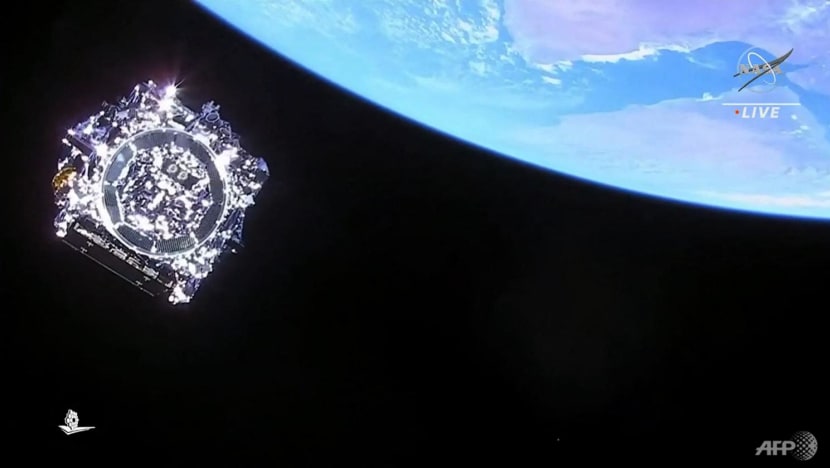
The James Webb Space Telescope's first images aren't just breathtaking - they contain a wealth of scientific insights and clues that researchers are eager to pursue.
queenslot Players must make a selection, including slot test, to consider risk-taking on their own, a game with a low payout ratio.
Here are some of the things scientists now hope to learn.
INTO THE DEEP
Webb's first image, released Monday (Jul 11), delivered the deepest and sharpest infrared image of the distant universe so far, "Webb's First Deep Field."
The white circles and ellipses are from the galaxy cluster in the foreground called SMACS 0723, as it appeared more than 4.6 billion years ago - roughly when the Sun formed too.
The reddish arcs are from light from ancient galaxies that has traveled more than 13 billion years, bending around the foreground cluster, which acts as a gravitational lens.
NASA astrophysicist Amber Straughn said she was struck by "the astounding detail that you can see in some of these galaxies".
THE HUNT FOR HABITABLE PLANETS
Webb captured the signature of water, along with previously undetected evidence of clouds and haze, in the atmosphere surrounding a hot, puffy gas giant planet called WASP-96 b that orbits a distant star like our Sun.
The telescope achieved this by analysing starlight filtered through the planet's atmosphere as it moves across the star, to the unfiltered starlight detected when the planet is beside the star - a technique called spectroscopy that no other instrument can do at the same detail.
WASP-96 b is one of more than 5,000 confirmed exoplanets in the Milky Way. But what really excites astronomers is the prospect of pointing Webb at smaller, rocky worlds, like our own Earth, to search for atmospheres and bodies of liquid water that could support life.
Lees Meer..