Capture Every Detail: The Advantages of ELP's High Performance 4K UHD Cameras
In today’s imaging-driven world, resolution alone is no longer the defining metric of camera performance. A High Performance 4K UHD Camera must deliver superior image clarity, low-latency data transmission, high dynamic range, accurate color reproduction, and stable operation across dive
Posted 6 maanden geleden in Other.

In today’s imaging-driven world, resolution alone is no longer the defining metric of camera performance. A High Performance 4K UHD Camera must deliver superior image clarity, low-latency data transmission, high dynamic range, accurate color reproduction, and stable operation across diverse environments.
Whether deployed in industrial inspection, medical imaging, intelligent surveillance, robotics, broadcasting, or scientific research, 4K UHD imaging systems require a combination of advanced sensor architecture, optimized signal processing, and precision optical integration.
ELP, a specialized developer of advanced imaging solutions, integrates high-sensitivity CMOS sensors, low-noise image processing pipelines, and versatile interface compatibility into its High Performance 4K UHD Camera systems—designed to meet professional and industrial standards.
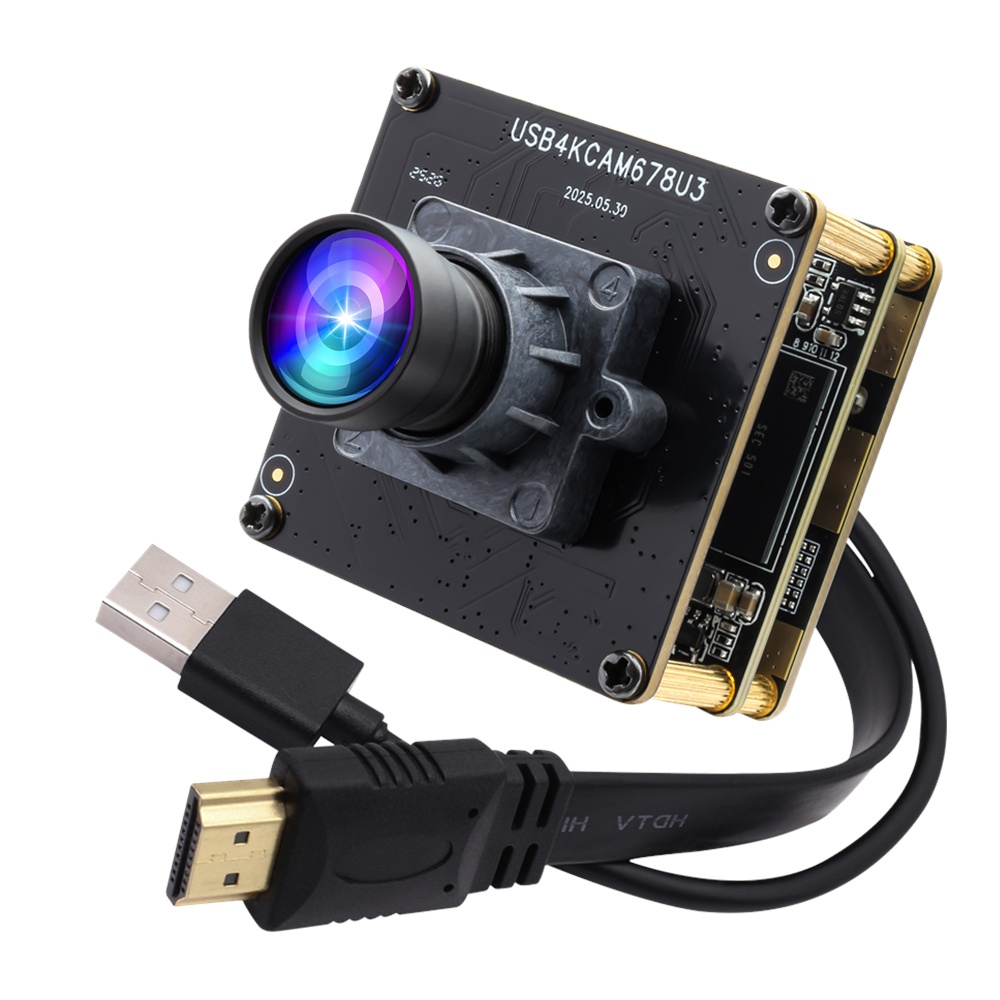
1. Understanding 4K UHD: Technical Foundations
1.1 Resolution and Pixel Architecture
A 4K UHD camera typically delivers a resolution of 3840 × 2160 pixels, totaling over 8 million pixels per frame. However, high performance depends not just on pixel count, but on pixel efficiency.
Key technical factors include:
Pixel size (µm) affecting light sensitivity
Backside illumination (BSI) sensor design
Quantum efficiency
Low read noise
Full well capacity
Larger pixel sizes generally improve low-light performance, while advanced CMOS sensor architectures enhance dynamic range and reduce rolling shutter artifacts.
ELP integrates high-grade CMOS sensors engineered for both sharp spatial detail and robust low-light capability.
1.2 Dynamic Range and HDR Performance
In real-world applications, lighting conditions are rarely uniform. High contrast environments—such as factory floors, roadways, or surgical rooms—demand wide dynamic range (WDR).
A high performance 4K UHD camera should provide:
≥70 dB dynamic range (or higher in HDR modes)
Multi-exposure HDR processing
Accurate highlight and shadow detail retention
Advanced signal processing ensures that both bright and dark areas remain distinguishable without overexposure or loss of critical detail.
2. Image Processing and Signal Integrity
2.1 ISP Optimization
The Image Signal Processor (ISP) is responsible for:
Noise reduction
Color correction
Gamma adjustment
Edge enhancement
White balance calibration
A professional-grade High Performance 4K UHD Camera incorporates a finely tuned ISP pipeline that balances clarity and realism without introducing digital artifacts.
ELP’s imaging systems emphasize low-latency processing, making them suitable for real-time applications such as robotics guidance, AI-based machine vision, and telemedicine.
2.2 Frame Rate and Data Throughput
High resolution increases data bandwidth requirements. A 4K UHD stream at 30fps or 60fps demands substantial transmission capacity.
Performance considerations include:
USB 3.0 / USB 3.1 interface
HDMI 2.0 output
MIPI CSI integration
UVC protocol compatibility
Efficient data compression and buffer management ensure stable frame delivery without dropped frames or synchronization issues.
3. Optical System Integration
3.1 Lens Compatibility
Sensor performance must be matched with appropriate optical components.
High performance 4K UHD cameras often support:
M12 mount lenses
C-mount lenses
CS-mount configurations
Auto-iris functionality
Optical alignment precision is critical to avoid edge distortion, chromatic aberration, or focus inconsistency across the frame.
ELP offers modular lens configurations, allowing system integrators to tailor focal length, aperture, and field of view based on application requirements.
3.2 Field of View and Depth of Field
In industrial inspection and surveillance, precise framing is essential. Proper selection of focal length determines:
Viewing angle
Target magnification
Measurement accuracy
Shallow depth of field may enhance subject isolation, while deeper focus ranges are preferable for monitoring or machine vision environments.
4. Industrial and Professional Applications
4.1 Machine Vision and Automation
High Performance 4K UHD Cameras significantly enhance defect detection accuracy in:
PCB inspection
Surface flaw analysis
Assembly line monitoring
Semiconductor inspection
Higher pixel density enables micro-level defect identification without mechanical repositioning.
4.2 Medical and Laboratory Imaging
4K UHD resolution supports:
Surgical visualization
Endoscopic imaging
Microscopy documentation
Diagnostic clarity
Low-latency and high-fidelity color reproduction are critical in clinical environments.
4.3 Intelligent Surveillance and Smart Systems
In security and smart city deployments, a high performance 4K UHD camera provides:
Facial recognition support
License plate clarity
Wide-area monitoring
AI-based behavioral analysis
Enhanced pixel detail improves digital zoom performance without severe image degradation.
5. Thermal Stability and Reliability
Professional-grade 4K imaging systems must maintain performance stability under:
Continuous operation
Elevated ambient temperatures
Variable humidity levels
Heat dissipation mechanisms such as:
Aluminum alloy housings
Passive cooling fins
Optimized PCB layout
Ensure sustained sensor integrity and extended product lifespan.
ELP designs camera modules with industrial durability standards to support long-term deployment in demanding environments.
6. Low-Light and Night Vision Capability
Resolution alone does not guarantee usable imagery in low-light conditions.
Advanced high performance 4K UHD cameras include:
High-sensitivity CMOS sensors
Infrared (IR) cut filters
Optional IR illumination compatibility
Noise suppression algorithms
These technologies enable clear imaging in suboptimal lighting conditions without excessive grain or motion blur.
Conclusion
A High Performance 4K UHD Camera represents more than high resolution—it is a precision imaging instrument combining sensor architecture, advanced signal processing, optimized optics, and stable system integration.
From industrial automation to medical diagnostics and intelligent surveillance, 4K UHD imaging enhances clarity, analytical accuracy, and operational efficiency.
With a focus on performance reliability and modular flexibility, ELP delivers high-quality High Performance 4K UHD Camera solutions tailored for professional and industrial applications worldwide.
Lees Meer..